_edited.png)
A Discussion on Ingenuity
Updated: Apr 23
— An Interpretation of the Deeper Meaning of “巧 .”
Speaking of 巧 (qiǎo, ingenuity), everyone is familiar with it. There are common expressions such as “心靈手巧” (have clever hands and good sense), “熟能生巧” (practice makes perfect), “巧奪天工” (a marvelous creation excelling nature), and “大巧若拙” (great ingenuity appears as clumsiness). Meanwhile, there are also negative phrases like “花言巧語” (sweet but insincere speech), “巧立名目” (rack one's brains for ingenious devices), “投機取巧” (wheel and deal), and “弄巧成拙” (make a fool of oneself in trying to be smart). Among the idioms mentioned above, the first four present 巧 (qiǎo) in a positive sense and regard it as desirable. The latter four present 巧 (qiǎo) in a negative sense, viewing it as akin to wrongdoing and therefore undesirable. Such complicated descriptions make it difficult for people to grasp the true meaning of 巧 (qiǎo), and consequently, the standards for conduct have long remained vague.

In Shuowen Jiezi, it is explained: “ingenuity means skill.” In Mozi · Guiyi, it says: “What benefits people is called ingenuity.” In Zhuangzi · Tiandao, “Carving and shaping not merely for ingenuity.” In Han Feizi · Shixie, “Abandoning standards and relying on ingenuity, abandoning law and relying on intelligence.” In Lunheng, “A doctor who can cure one illness is called ingenuous.” From these examples we can see that Chinese ancestors also spoke of 巧 (qiǎo) with both praise and criticism, reaching no unified conclusion. Even after reading many such explanations, it remains difficult to determine the original meaning of 巧 (qiǎo) or what attitude one should take toward it.
The character 巧 (qiǎo) does not appear in oracle bone or bronze inscriptions; instead, the character 丂 (kao) was used as a substitute. 工 represents all skills in the world, while 丂 represents a stream of subtle particles rising from below to the heavens.

When skill develops infinitely toward the microscopic and ascends like 丂 (kao), it becomes 巧 (qiǎo). Thus, 巧 (qiǎo) is not a negative thing; rather, it is a form of cosmic wisdom. This kind of wisdom is not a form of opportunistic behavior—seeking to gain more while giving less. Rather, it represents a capacity characteristic of a higher level of life. When one’s moral virtue is elevated, one’s wisdom naturally deepens; and when wisdom deepens, one’s capabilities necessarily become stronger.
Can such ingenuity be obtained through the traditional Chinese master-apprentice system? Traditional apprenticeship emphasizes the cultivation of virtue. If an apprentice does not cultivate virtue, true ingenuity cannot be attained. This is why many people try to solve the problem of cleverness simply through hard practice. The method of enduring hardship involves enormous effort yet yields only a little skill. Some may study under a master for thirty years and still fail to graduate. The reason is that they believe only in hard practice, not in cultivating virtue.

The principle behind ingenuity is this: for everything, truth has only one path, yet it is mixed among millions of other paths. This is ingenuity. It is what may be called the “sand-path effect”: one correct path hidden among countless wrong ones. Without wisdom, one can never find it. For human beings and many intermediate forms of life, discovering a path of ingenuity is extremely difficult; it requires both great virtue and great wisdom. The subtle ingenuity of the universe truly exists, and living beings are permitted to attain such ingenuity. However, it must be obtained through a righteous path. The presupposed condition is that only those who possess great virtue will be granted great ingenuity.
After the Industrial Revolution, people came to believe that scientific design represented the ultimate in ingenuity, exemplified by the invention of generators, steam engines, telegraphs, communication cables, and spacecraft. These are indeed a kind of ingenuity. People become fascinated with them because the human world mistakenly believes that such technologies represent the ultimate limit of ingenuity and the only correct path. Furthermore, people believe technological development can be achieved through repeated experimentation, and thus, people assume experimentation itself is the road to ingenuity. This, however, is fundamentally mistaken. Why has Earth experienced so many cycles of civilization, yet each civilization eventually reached the levels of industry, electronics, and nuclear power and then stopped? Because they all took the path of pursuing ingenuity through experimentation. No matter how many cycles humanity goes through, its wisdom ultimately remains on the same level. This is because human beings do not follow the path of cultivating virtue; instead, they attempt to pursue ingenuity itself directly through experimental methods. As a result, they are inevitably constrained and will never be able to reach genuine ingenuity.

Ingenuity exists at different levels: minor ingenuity and great ingenuity. Minor ingenuity corresponds to lesser wisdom, whereas great ingenuity corresponds to greater wisdom. As Laozi said, “Great ingenuity appears as clumsiness.” This means that great ingenuity and profound wisdom are hidden within the myriad things in the universe. Without cultivating great virtue and letting great wisdom arise from it, people cannot perceive the true nature of ingenuity. To obtain ingenuity, one must cultivate virtue. The greater the virtue, the greater and more abundant the ingenuity.
The universe limits human ingenuity through virtue because cosmic order must be preserved. If life possesses intelligence without virtue, it will use cleverness for wrongdoing, leading to chaos in Heaven and Earth, cosmic wars, and ultimately the destruction of the universe. Therefore, if humanity wishes to obtain ingenuity, cultivating virtue is the only path—the only correct path within the “sand-path effect.”
Returning to the idioms mentioned at the beginning: since 巧 (qiǎo) is a form of wisdom in the universe—including human ingenuity—it appears in many forms. Military stories such as secretly crossing Chencang, floating across a river with wooden containers, or burning Cao Cao’s camp; ingenious crafts such as the Kongming lock, the wooden ox and flowing horse, and traditional wooden bracket architecture; literary masterpieces such as Li Sao, Ode to the Goddess of the Luo River, Preface to the Pavilion of Prince Teng, and the poetry of Li Bai and Du Fu—all of these are examples of human ingenuity. Sun Wukong’s transformations are also 巧 (qiǎo), and the Buddha suppressing him beneath the Five-Element Mountain is likewise 巧 (qiǎo).

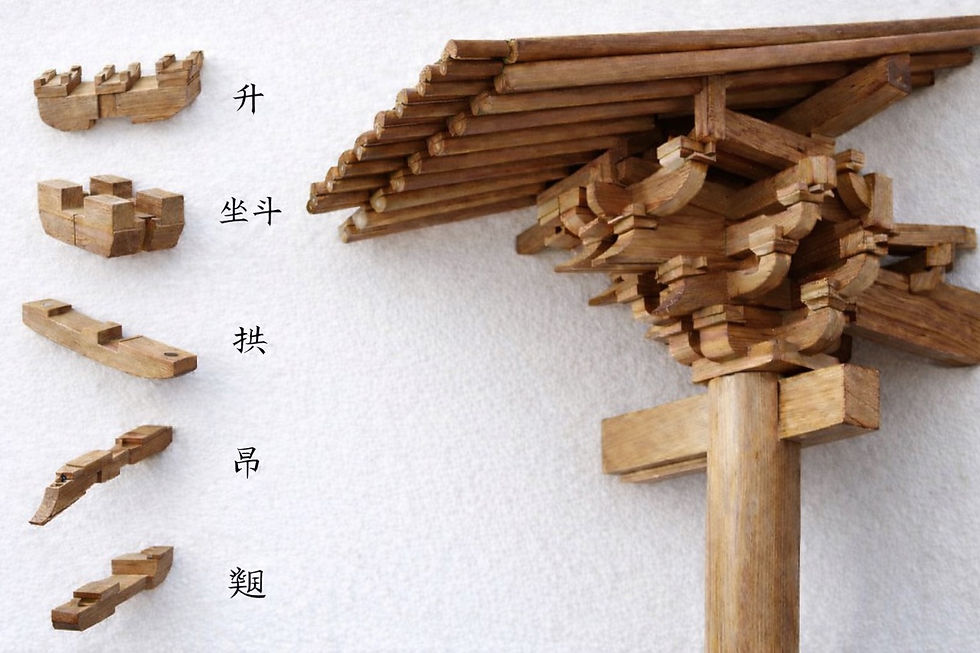
All of these may be pursued—but they must be pursued through cultivating virtue and through the righteous path. When obtained through virtue, it becomes 心靈手巧 (have clever hands and good sense), 巧奪天工 (a marvelous creation excelling nature). When obtained through diligence, it becomes 熟能生巧 (practice makes perfect). When obtained through great virtue, it becomes 大巧若拙 (great ingenuity appears as clumsiness). When obtained through deception, it becomes 花言巧語 (sweet but insincere speech), 巧立名目 (rack one's brains for ingenious devices). When obtained through cunning, it becomes 投機取巧 (wheel and deal). When obtained through malice, it becomes 弄巧成拙 (make a fool of oneself in trying to be smart).
This is only a simple interpretation and may not be entirely correct. It is offered merely for everyone’s reference.


Pulled a still from my latest episode to use as a thumbnail and my guest's tie had this wild interference pattern all across it. Rerecord wasn't an option. Ran the frame through this video moire tool and popped it back into my template. Saved me two hours of pain.